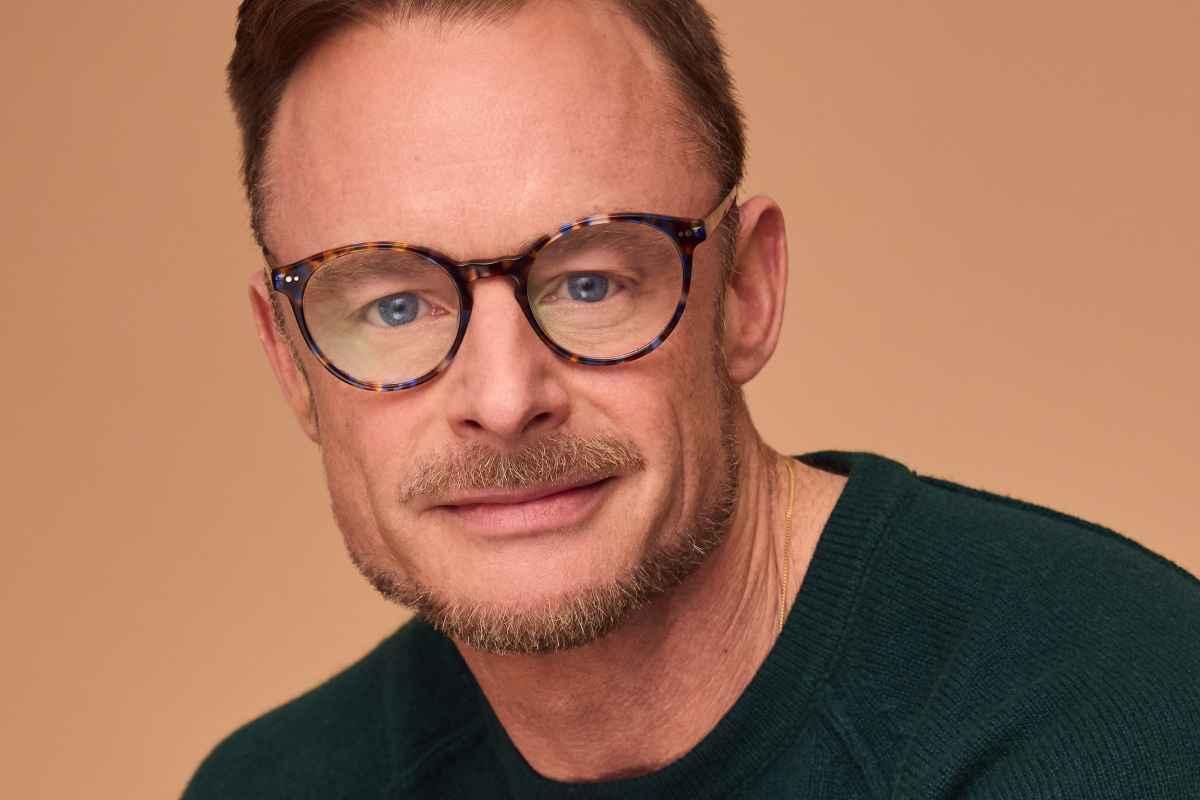
The following are selected, edited excerpts from a transcript of the talk with Christopher Wheeldon that I moderated for Verdensballetten in connection with the Royal Danish Ballet’s performances of his work “Corybantic Games”.
The talk took place on Saturday, May 23, at Normann Copenhagen.
Set to Leonard Bernstein’s “Serenade after Plato’s Symposium”, “Corybantic Games” is a one-act ballet that Wheeldon created for The Royal Ballet in 2018. The Royal Danish Ballet danced it this spring on a triple bill called “Giant Steps”, alongside Balanchine’s “Apollo” and “The Four Temperaments”.
Wheeldon shares his thoughts on returning to Bernstein’s score, on Plato’s Symposium and the ancient Greek themes that run through the work, and on the deeply moving fourth movement ‘Agathon’, with its three couplings — male-male, female-female, male-female — given equal lyrical weight.
He talks about his creative process: no charts, no diagrams, no advance planning beyond a first image or two, but rather walking into the studio with the music inside him and building the ballet in dialogue with the dancers in the room; a way of working he traces back to Balanchine and to his early years at New York City Ballet.
I also ask about his recent full-length ballet Oscar for The Australian Ballet, his work with musical theatre on Broadway and the West End (“An American in Paris”, “MJ the Musical”), ballet’s conversation with classical antiquity and the question of beauty, and whether the art form is being kept alive out of duty rather than desire.
********
Corybantic Games in Copenhagen
You’ve just watched the Royal Danish Ballet dance “Corybantic Games.” How did it look? What was different, if anything, compared to the Royal Ballet? And perhaps compared to the Paris Opera Ballet, which did “Corybantic” last autumn?
It was particularly exciting to see the piece, which was made for the stage at Covent Garden and then later performed at the Paris Opera, in a more intimate setting. It was something I was nervous about because the work is quite complex in its layering, and sometimes when you compress a piece of dance it can feel overly busy. But this theatre, as I’ve learned in the past, even though it’s smaller and more intimate, has the most delicious proportions, and somehow it actually arranged the eye, for me, in an even better way. So I enjoyed that very much. The dancers were really committed, which always makes me happy.
We had a really nice eight days together in the studio, really, really working hard on communicating clearly with the audience, bringing the audience in. For me it’s so important, this connection, and that only really happens when the dancers are fully committed physically, musically, and have an idea of the intention and what it is that they’re saying when they’re dancing. And that, for me, has always been a great strength of this company.
Did you change or adapt anything in rehearsal here in Copenhagen, or are your ballets quite “set”?
We really didn’t adapt it. I think different dancers obviously bring different qualities to a role, and one of the big surprises and delights for me was actually Wilma in the second movement, because it was created originally for Beatriz Stix-Brunell, a very, very different dancer.
Sometimes you put a ballet on a new company and they bring a new personality to the piece, like the Royal Danish dancers did, and particularly Wilma. I just found her quality in that second movement really quite special, and quite different from the original intention in a very successful way.
And that’s why it’s exciting to have your work performed by different companies, when a dancer takes the work that you’ve made and can actually expand on it artistically. And it wasn’t just Wilma, but she stood out for me. We did make a couple of adjustments for her, because I was excited in the room, and so we changed a couple of little tiny things.
But for the most part it’s the “Corybantic Games” that we just did at the Paris Opera.
Corybantic Games & Bernstein
You first made a ballet to this score by Leonard Bernstein in 1999, for Boston Ballet, called “Corybantic Ecstasies”?
Well, “Corybantic Ecstasies” was a completely different ballet. In fact, I don’t think there is any relation other than sort of a Greek theme. There’s 20 years between the two, and I butchered it the first time, and I was kind of devastated, because I’ve always loved this music.
My grandfather had a huge classical music collection. I grew up loving musicals, and somehow this piece did all the great things that I love about classical music, and also all the things that I love about musical theatre and Broadway. It’s sort of the crashing together of those two worlds. I was a little bit ashamed that I didn’t do it very well the first time around, and so when the Royal Ballet announced this Bernstein Festival, which was the programme that the ballet was created for, I thought, okay, that’s my second chance. I can go back to it and see if I can do a better job.
What attracted you to the music, and what gave you the title “Corybantic”? Is “Corybantic Games” (2018), almost 20 years later, a different ballet?
“Corybantic Ecstasies,” the title came from a description that the music critic Virgil Thomson wrote about Bernstein’s conducting. The line was, “he conducted with corybantic ecstasy”, and I was like, oh, that’s… then I researched who the Corybants were, and very much enjoyed that connection with the kind of ancient Greek themes.
Of course it’s based on Plato’s “Symposium,” although a lot of music writers, and I think they’re right, say that it’s not in any way literal.
I chose not to follow the structure of the “Symposium,” although the piece does suggest ideas of love, and in many forms. The first version, “Corybantic Ecstasies,” was very… they were very literal Greek myths, so it was Eros and Psyche, Echo and Narcissus, Dionysus. I sort of made these little miniature stories, and it wasn’t very good.
Symposium
I know that as an artist you don’t think you should explain your works, but leave a great deal of room open to interpretation. But when the curtain opens on “Corybantic Games,” I can’t help but see the outline of a “ladder,” or steps, in the designs by Jean-Marc Puissant on the sides of the stage.
That brings to mind Plato’s “Ladder of Love” — or the Scala Amoris — which describes the ascent of human desire from physical attraction to a supreme understanding of absolute beauty and truth. Base lust is transformed into spiritual and intellectual enlightenment.
Also, the opening — which is very poetic and moving, very tactile — is for one, then two men, perhaps recalling the opening of “Symposium”; the dialogue of Phaedrus and Pausanias.
Bernstein’s piece is actually called “Serenade after Plato’s ‘Symposium’,” and its movements are named after the speakers in Plato’s dialogue.
How much did that influence your ballet? It’s not called “Symposium,” but these two examples point to some reference in the work.
I read the “Symposium,” and I did want to honour it in some way, but it was an inspiration for the work rather than following the structure of it, along with the first Olympics and also the Corybants, this tribe of dancing warriors who would dance in ecstasy and crash their souls together and create this great kind of abandoned ruckus. Actually the piece is, for me, a kind of organised chaos, in a way. It has this structure, but also these layers that come crashing together in counterpoint, and at times it’s extremely busy, and then it arranges itself into a very clear rhythmic structure, and then it breaks apart again.
So for me, almost always with an abstract work, the music comes first, and I don’t plan. I plan as much as I would say, okay, I think this ballet should start with one man, and then another woman will join, and that is really all I planned, even for the structure of the rest of the ballet. It’s always been the way that I’ve worked; I love to be in the room with dancers. I used to beat myself up a little bit about it, because I would see other choreographers making copious notes, and creating charts, and making designs.
So you’re not like Petipa, with the chessboard?
No, no, no, no. Or Alexei, in fact, because Alexei Ratmansky does a lot of preparation. I like the spontaneity of being in the room, and I’m lucky in a sense, because not always, but most often, it works out, this way of working, and I’ve come to embrace it.
Like I said, I used to be a little bit afraid of it, because of course you’re leaving a lot to being inspired in the moment, and sometimes that can be quite high pressure, when you’ve got 40 dancers all waiting – and often this is the way they wait, or this way; girls with their pointe shoes. [Demonstrates]. But I love that, I love that.
And that’s the way Balanchine worked, wasn’t it?
It’s the way Balanchine worked. Even though Peter Martins wasn’t really a mentor type, he was a mentor in that he gave me the stage of the, now, Koch Theatre, and the New York City Ballet, to discover my voice. But one thing he always did say, and he really encouraged, was following the philosophy of Balanchine; just get in there and do, just go and make, and don’t think too much, and feel. And that’s really how I started working, and how I now continue to work.
So I learned about the Corybants, I read the “Symposium,” and then I listened to the music until I really feel it from within, and then we just get going, and three, four weeks later, there’s a ballet. And sometimes it’s a good one, and sometimes it’s not.
Longing for The Other
One of the original myths of love that appears in the “Symposium” is the myth that humans were originally powerful, spherical beings with four arms, four legs, and a single head with two faces, that were sliced in half by Zeus.
After being split, these newly halved beings were filled with longing, wandering the earth to find their missing counterpart. According to the myth, they feel a deep, wordless comprehension and desire to become one again. Therefore, the pursuit of finding our “other half” is what we call love. The pursuit of wholeness. Longing.
The fourth movement of your ballet, “Agathon,” is so deeply moving in that way, truly profound and beautiful. It’s very organic, yet a lot of it is also sculptural, almost frieze-like. Also very erotic.
Can you tell us something about this section?
Well, you’ve just described it perfectly, so now I don’t have anything to say, really. Again, it really is the way that I feel and see the music. And it was very simple. When I gather the dancers together, one of the things that I love to do is make music visual for an audience.
It’s one of the reasons why I love Ligeti so much, because as a composer — György Ligeti, the Hungarian composer, pianist — I used his music for a ballet called “Polyphonia,” which was kind of the ballet that made everybody in New York go, okay, maybe he can have a career.
And I love that music, because there are all these mysteries kind of locked inside, and these layers and stories. I think, just to the naked ear, for somebody who isn’t perhaps a contemporary music enthusiast, it’s not particularly accessible as classical music. But one of the wonderful things about dance is you can kind of unlock some of those mysteries and make the music visual for the audience, and then they appreciate the music in a different way.
And that’s really two very simple ideas: the unlocking of this very beautiful, elegiac piece of violin writing. And also just the depiction of the three forms of human love: male-male, female-female, male-female. And not just romantic sexual love, but also sisterhood, brotherhood. Those were the themes that I walked into the room with.
And then, as I started to create and it began, actually, I began with the first couple. After that, as so often happens, we got the piece to the stage, and I’m like, “you know what, this needs, it just needs for these couples to be coming in and out of focus for us”.
So first of all, you direct the eye. And one of the great benefits of working with a phenomenal lighting designer like Peter Mumford is that he creates this almost immersive kind of… with light, he makes texture in the air, without the use of smoke or anything. It’s really very beautiful, I think, what he does. And then just to shift in and out of focus on these three couplings, and how that also then helps the eye and the brain arrange the music.
So I’m really happy that you saw all of the Plato in there too, because I think subconsciously that was coming through as well. But I didn’t sit down and plan it around those ideas.
It’s so interesting that it really comes out subconsciously, or creatively. You mentioned yourself that you have the three forms of human love depicted in that particular movement, and I was going to ask about the three types of beings that Aristophanes names: the Children of the Sun — two male bodies fused together; the Children of the Earth — two female bodies fused together; and the Children of the Moon — one male and one female body fused together.
My friend Dorte Jelstrup, who’s also here today, was deeply moved by “Corybantic Games,” as was I. Afterwards, she called it a “ballet shock”. She said that she’d been struck by a work making such powerful arguments through its aesthetic language, through pure form.
And she saw it as making a quietly powerful case for same-sex equality, not by declaring anything, but by simply letting those partnerships exist on stage with the same lyricism, weight, and tenderness as any other.
The choreography itself is the argument. Was that part of your intention?
Yeah, a little bit, yes. It was actually… Thank you, that’s actually quite moving to hear that, and to have somebody recognise it. Since “Corybantic,” I went to Australia a year and a half ago, and I made a ballet about Oscar Wilde, but I think in “Corybantic” the intention was always to show, really just put these three very beautiful, very natural forms of love on the stage together, and give them all equal value.
So yes, that was something that I came into the room with when creating that movement. But it’s also something that you just don’t want to hit too hard over the head. And, again, for me it all lives so much in the music. It’s truly one of the most beautiful passages of violin writing, I think, in the classical repertoire.
You mentioned “Oscar”, which you recently created for the Australian Ballet, a ballet about the life and work of Oscar Wilde. It is your first full-length ballet centred on a gay love story. You’ve spoken about the absence of gay love stories in classical ballet, noting that Matthew Bourne was a pioneer, but that was nearly 30 years ago, and his company isn’t classical. So my question is: is this something you feel a responsibility to address?
I mean, it’s my story. I’m a gay man, and one of the most moving things about making “Oscar” was the effect that it had on the young gay male dancers in the company. They felt actually seen. In a way so many classical ballets, of course, are very heteronormative. You’ve got princes and princesses, and so often gay men are asked to play very heterosexual roles. And so I think for them — one kid said to me, he’s like, “I can’t quite believe that my first principal role is going to be playing”… he was playing the lover of Oscar Wilde, Lord Alfred Douglas. And he’s like, “my parents, we’ve never really talked about me being gay, but I know they love me, and I know it’s going to be okay, but they’re going to come up to Sydney, and they’re going to see me dance this role, and it’s going to be a very big moment for me with them”.
So that wasn’t my intent. When I set out to make the piece, I love the story, I love the character. It just felt like the right story to be telling at that moment for me as an artist. But it’s not really the first full-length ballet; of course John [Neumeier] has done “Swan Lake” and “Nijinsky,” and so many others. But it was quite cathartic, I think, for me as an artist, and also for the company to have the opportunity to dance it.
And we’re taking it to America. We’re taking it to, thank god, San Francisco and New York. Because no, we’re not going to DC with it, that’s for sure: there’ll be no Kennedy-Trump Centre performances. But yeah, it’s important, it’s an important time to be doing this work in America as well, even in those liberal cities.
The Corybants
So back to the Corybants, they seem to take over the stage in the last movement, in the sort of frenzied virtuoso movement. Who are they in your reading of the work, and how did you find the movement vocabulary for that sort of athleticism?
Well, certainly the music. I love the fusion of the jazz elements. I mean, you can actually hear moments of “West Side Story” in that. I think just the energy, again, the energy and drive. And there’s something quite primal and tribal about some of the churning rhythms that exist in the strings. And this epic… the beginning of that movement, it just felt so right to have this kind of powerful Mother Earth warrior figure leading. I suppose you could consider her to be the leader of the Corybants. And so, again, it was very much the music, the groundedness, and the churning feeling that I just feel.
It’s always so surprising to me, the feeling of going into a studio, an empty studio, no dancers, and walking out a month later, three weeks later, and there’s a piece of art. Again, sometimes good, sometimes bad, but it exists, and it comes from within. And it’s a very natural thing for me, it’s the thing I know how to do, and I’m astonished by it often.
“After the Rain” was an incredible example of that, because I set out to make something very structural. Really, it was structure for me, it was an exercise in structure. And I remember we ran the piece for the first time in the studio, and somebody came to see it, a friend of Jock Soto’s — because it was created for Jock and Wendy — and she was in floods of tears at the end of the run. And I was just so surprised, because I’m looking at it, and I’m thinking, oh, these are great shapes, the sculpture’s good, the bodies are working in harmony. And it turns out I made this piece that actually was a deep reflection on my relationship with Jock. We were partners for seven years, we’d just broken up, I think. There’s a lot of expression of loss, of coming apart, but also of togetherness. None of it was intended, it really was just, as I said, a sculptural exercise.
And that, I think, was maybe the first time I was like, okay, you, Chris, you’ve got to trust your instincts, your creative instincts. And not try and shut yourself off in a studio, and draw lots of diagrams in a book, and come up with it that way, because that’s not how you’re going to work.
Bernstein & Broadway
There are moments in “Serenade” that almost feel like Bernstein anticipating himself — its comes after “On the Town,” but just before “West Side Story” and “Candide,” and you can hear a lot of the energy and dance from those works in “Serenade.”
You’ve worked on Broadway and the West End, and Verdensballetten will dance a pas de deux from your production of “An American in Paris” this summer.
You recently created an evening for the Royal Ballet called “Ballet to Broadway”, which puts that exchange right in the title. Can you talk a little about the cross-exchange between ballet and musical theatre or working on those worlds?
Well, it’s interesting, because the experience working on “An American in Paris” really fell into my lap in a lovely moment of serendipity. The two producers actually were fighting for the rights to put “An American in Paris” on stage. It had never been done as a stage musical. A producer over at Disney, and Jean-Luc Choplin at the Châtelet in Paris, were vying for the rights, and they’d actually both worked together at Disney at one point. So they decided in the end, well, let’s just band together, one of them will do it on Broadway, and we’ll open it in Paris. It’s a very nice marriage. And they came to me and said, will you direct and choreograph it?
I had never worked with actors. I pretty much said in that moment, absolutely not, I’d love to choreograph it, but I wouldn’t know the first thing about directing an actor. But they were very insistent, they said, “Jerome Robbins had such a great success as a director-choreographer, and we really feel like this is a dance-driven show, it should be one vision. So why don’t we just try, and we’ll have various stages of the process, and if we don’t feel like you can do it, we’ll bring in the director, and if you feel uncomfortable, and you feel like you’re not doing it well, we’ll just assess as we go”.
So we did that. Those first two sessions, we did a reading; they call it a 29-hour reading, it’s a standard Broadway thing, where you have a bunch of actors for a week, and it’s a very low pay grade for them and you have to fit it all exactly into 29 hours, and at the end of that week you do a presentation for producers.
So we did that, and it was the most uncomfortable week of my life. I was so far outside of my comfort zone, serious imposter syndrome, sitting there going, I just don’t know what I’m talking about, but I’m gonna keep going, and I’m gonna smile. It was all actors, because we weren’t doing any dancing, because it was a reading. And I’m like, I don’t really know what I’m doing, so I’m just gonna move people around. And they were very confused, because usually these readings are just a music stand and a chair, and I’m like, let’s get up, let’s group this moment, and let’s have the three principals kind of come. So I very clumsily directed that week-long reading, and the producers came, and they were like, “this is the best reading we’ve ever seen, it’s so dynamic, there’s so much staging”. So that was the way in.
And I started to realise, the more I worked with actors – I mean, it made me love dancers even more than I already do. Because actors, I now have come to really love that process, but dancers are just there, and they just give themselves over to you as a creative being, as a collaborator. And of course, actors are much more about the why, and the motivation, which is very important, of course, but it’s just very different, different language.
But when we came together to do the show, we had a cast that were, I’d say, 30 percent dancers — ballet dancers who’d never done a musical before — and then 50 percent actors. And they learned, I watched the process, and they were learning so much from each other. The actors started to come to the studio early and be around the dancers, and the actors started to question less, and the dancers started to question more, and there was this really interesting thing that started happening. And I learned that actually, you can, of course, study to be a director, and many people do, and they go to Yale, and drama departments. But actually, in the end, it’s really about storytelling, and how you get to the best version of that story. And every director directs in a different way, and my way at the beginning was through movement. And now I still feel very much like I’m learning so much about that process, because I’ve only made two musicals. I’m just about to do my third, and I still feel like a rookie, and still kind of don’t really know what I’m doing. But it seems that people like the shows.
So the two worlds, I think for me, then started to really dance together in a lovely way. After I’d done the first version of “An American in Paris” for the Châtelet, in between the Châtelet premiere and bringing it to Broadway, I made “The Winter’s Tale” for the Royal Ballet, and suddenly found myself really diving into Shakespeare and really going text first. How can I take this text and translate it into movement that feels character-driven? And so working with a script, working with a writer, which is a much more involved process as a director than… I certainly had this very naive idea that they would just put a script down in front of me, and that I would just be expected to bring that script to life. But on a new musical, you’re working day in, day out with the writer, and you’re editing, and cutting. And so I learned all of this; how to manage text, how to shape a scene. And that started to really move into my choreographic process. And “The Winter’s Tale,” I think, was richer for having had that.
Apollo
Today’s programme is called “Giant Steps.” Your piece follows two ballets by Balanchine, “Apollo” and “The Four Temperaments.” “Apollo” is a foundational “Greek” ballet. Balanchine called it the turning point in his life. And here you are, a 21st century ballet choreographer in the middle, also reaching into antiquity. Do you feel yourself in conversation with him across that programme? And is Balanchine a presence for you generally? A model, a measure, something to push against? I know that you now live in the same building as Balanchine.
I do, I do, yes. Not on purpose, just so you all know, I didn’t seek that out. I live on West 67th Street, in the building that Mr. B lived the last 30 years of his life in, which is a really, really fascinating building. I was telling Alexander, it was built in 1900. It was one of the first buildings on the Upper West Side, the first building in New York City to have an elevator, and it’s still the original elevator. It has to be operated by the doorman. And there was a big doorman strike in the 70s, and Mr. B actually ran the elevator for the building, which says a lot about who he was.
But yes, I think this ballet is very much in conversation with Balanchine, and it was really fascinating for me to see both “Apollo” and “The Four Temperaments” and actually see the development of themes that subconsciously I’d put into… because I hadn’t… I danced in “The Four Temperaments.” I never danced “Apollo.” I would have loved to have danced “Apollo,” but I didn’t have the chance to do that. But I did dance in “The Four Ts.”
I retired in 2001, I was 28 years old. “The Four Ts” is not a ballet that I see very often, it’s not performed very often outside of New York. I think I saw the Royal Ballet do it maybe seven or eight years ago, and since I stopped dancing, I’ve maybe seen the New York City Ballet do it twice. But it’s in there. And so seeing some of these themes, like in “The Four Ts,” and then how those become more liquid in “Corybantic” – and of course the flexes – it was fascinating just to recognise those things, and see how they then blossomed out into new ideas. Everything that I learned from my years in the New York City Ballet, from dancing in those great works of Balanchine, and also Robbins.
But feeling them from within is really fascinating. To be a dancer in a Balanchine work, and feel the architecture of the work around you, and also see it from the back, and see it against the black of the auditorium, and see the bodies moving this way. And I often, when I’m watching something like “The Four Ts,” I put myself back in that place, and I can see it from the other side as well, which is always fascinating. It’s a view of the work that only the dancers get.
Greek Antiquity & Timeless Beauty
Christopher, when I wrote a book about ballet a couple of years ago, the history and the main works and main artists of ballet, I chose a moment from your ballet “After the Rain” for the cover.
It seemed to say something fundamental about ballet to me, and there was something about that moment in your dance, with the woman standing on her partner’s knee, suspended in the air like a figurehead on the prow of a ship almost, that reminded me of the Nike of Samothrace, the Hellenistic sculptural masterpiece that stands at the Louvre.
When I look at “After the Rain,” or at the slow passages of “Corybantic Games” and many other ballets, I see something that feels like a deliberate conversation with ancient Greek sculpture: the beautiful body in extremis, expressive but composed.
You are a contemporary ballet choreographer, but you also have what I can only call a timeless sense of beauty.
Do you feel that conversation with antiquity consciously when you’re making work? Or is it something that emerges through the form itself, through the trained body, the line, the proportions ballet inherited? And does that classical lineage help ballet stay contemporary, or is it a weight the art form has to carry?
God, that’s a really… that’s a long question. Maybe I’ll sit down for this one. No.
Yeah, I think I’m always fascinated by the connection, the emotional and physical connection. The sculpting of bodies, for sure. I’m fascinated by shape and the space around the bodies and between the bodies, and often I come at things in a very structural way and from that, so often stories emerge, and the piece takes on an emotional life. And it’s one of the beautiful things, if you’re able to make an abstract work that does create, or allow, the audience the freedom to feel and imagine and meet the piece halfway.
And for me, ballet has become so extreme in many ways, physically, that I’m always looking for what is within that, what is the connection that then turns into poetry.
And I don’t really know how to describe how I do that, because I don’t really know how I do it, honestly. I think I’m a big fan of classical art. I think it’s subconscious the way that it kind of goes into my work, but it is something that I love.
Is it a weight on ballet? I don’t know. I feel like I don’t really know what that means.
Beauty itself, as an aesthetic value, is treated with suspicion in a lot of contemporary art, or it’s certainly challenged – the traditional views of beauty.
Ballet is often criticised for body images that some find unnatural or unhealthy, but the body in ballet — the line, the extension, the proportion — is inseparable from the aesthetic, in my view. Can ballet reform whose bodies it celebrates without losing what makes it ballet?
I think it’s such a hard question to answer, because it’s always going to upset someone in some way. So I’m sweating a little bit now. I think ballet is a specialised art form. It just is. And it requires certain qualities.
It certainly doesn’t require, or shouldn’t require, anybody to be unhealthy. But it is a beautiful art form. It is something that has been designed to be refined and delicate. And I don’t mean thin. I just mean there are certain requirements, and that’s part of the beauty. It’s like, if everyone could do it, it wouldn’t be this magnificent, special thing.
I do think that there is now a far more healthy structure. And the way that kids are now being trained supports a much more healthy look at mental health and the physical being. I think there are many beautiful dancers who capture all of those refined things that are necessary for ballet, who are fuller of figure now.
And I’m fine with that. If I have a dancer in front of me who can transport, take me on a journey, and capture the qualities that I enjoy in an artist, I don’t really care. I just want to see that talent, that gift. And that doesn’t necessarily mean that the body has to be tiny.
But I don’t think that ballet can be for everyone. I don’t think it’s necessary. Not everyone can play that beautiful violin concerto. It’s precious.
And I’m now rambling and I don’t feel like I’m really answering your question. So let’s move on. It’s complicated.
When you’re in the studio with a dancer, what are you actually looking at? Is it the body, or is it something the body is doing, something closer to intention, or musicality, that a particular body happens to make visible?
It’s all of those things, for me. There are a lot of really physically gifted athletic dancers now who can turn forever and jump really high. But the magic is in the musicality and the aura. And the ability to communicate story where there is no set story. That’s what excites me.
It’s one of the things that I loved so much about a dancer like Wendy Whelan. She just — she went up on pointe and there was already something fascinating about that. And when you have a dancer that has that quality… People always say, what makes a ballerina? It’s very hard to define, but it’s so clear when there’s a ballerina in front of you.
And I think it’s a combination of all of those qualities. Physical gift, obviously, like really great fundamental strength and technique. Musicality and imagination. Lightning doesn’t strike very often, but when it does, it’s truly magnificent.
No One Cares About It
Timothée Chalamet: he doesn’t want to work on things “where it’s like, hey, keep this thing alive, even though no one cares about this anymore.” He named ballet and opera.
Does he have a point? Is ballet an art form being kept alive out of duty rather than desire?
I mean, listen, it has a place. I was a little sad to see so many empty seats at the Royal Theatre, I have to say, over the last few days. And I do think that it is happening a little bit more often now, that I’m experiencing that.
Not so much in cities like London and Paris, where there’s a big tourist audience that comes to the theatres. But I just think there’s so much interesting work going on. And maybe it’s just that we have to figure out how to get people into the building. It’s not that the art form is dying. I think when people come and they see a magnificent performance, whether they are ballet fans or not, if they’re moved by it, they’re going to fall in love with it, and they’re going to come back.
But the big challenge becomes, how do you get people into the building? How do you get the younger generation into the building? I think they do a really good job with the New York City Ballet with that.
Yes, it’s really vibrant.
The audience right now, I think, is largely down to the collaborations. For example, Justin Peck is often bringing in really interesting contemporary artists. And there are the contemporary art nights at the ballet where they bring in an artist to design the work, and also have an exhibition in the house, and the ticket prices are down. So younger people are coming.
So we just have to be creative about getting the audience in. I don’t think the art form is dying. I think ballet is thriving at the moment. I think it’s exciting. But we just have to figure out how to get the bums on the seats.
When I spoke to Wendy Whelan about it a couple of years ago, she also credited social media for a lot of the younger people coming into the audiences in New York.
Yeah, it makes sense. And they’re making these beautiful… I don’t know if you’ve seen any of the little films they’ve been making. They made a beautiful film of one of the duets from “Continuum.” And they found this young filmmaker in New York, and the whole thing was filmed on a robotic arm. It was a camera on a robotic arm, and it moved with the dancers in a way that was so successful.
It was the first piece of my choreography that I’d ever seen filmed that felt dimensional. And even the way that the camera moved felt emotional, which is hilarious because it was on a robot arm. But obviously with an operator. It was musical the way that it moved. At one point the ballerina lowered down to the ground on her side, and the camera moved with her. I think their social media and their marketing and these films are really engaging.
And I think Wendy’s right. I think it probably is bringing a younger audience in.
We’re going to round this talk off, but maybe we should just ask you about the future? Maybe what about your future? What’s happening next? And are you coming back to Copenhagen?
Well, I hope so. Amy [Watson] and I had a nice meeting the other day, and I would very much like to. I love being in the city, and have very much enjoyed my experiences working with the company.
The older I get, the more I want to be at home, though. So that’s complicated. My immediate future is home to my husband and my dogs. But I have a new musical coming up, which I’m going to be working on. And that’s a luxury for me, because it means I get to be in New York. So that’s the immediate new project. Then two short ballets that I’m making for some festivals this summer.
“Alice” is going to be in Buenos Aires next month, so I’m going down there for that. “Within the Golden Hour” is going to be performed in Vienna with Alessandra and her new company there. I say new, because the entire roster of principals has changed since I worked there a year and a half ago. So I’m excited about that.
And then I’m actually going to Melbourne to work on “Oscar.” I’m going to go back, because I feel like the second act is really good, but the first act just isn’t quite there. So David Hallberg is allowing me to go over and do a little bit of work on it before we take it to America. So yeah, it’s quite a busy summer of travel. But yeah, I’m still very lucky. I get to work with just the best. It’s a good life.
Thank you, Christopher, this has been excellent, very enlightening and insightful and honest… I think we have time to take a few questions from the audience?
Questions from the Audience
#1 Just a short question. If you could pick any story, any music, with a limitless budget — what would be the story, the composer, and the dream cast? You can pick any dancer.
Oh, goodness. Do you know what? I’m embarrassed, because I’m going to say to you that that is sort of where my life is now as an artist.
I have many offers to work with many companies, and more often than not, directors are like, what do you want to do? What’s your dream? What’s your dream story? Who’s your dream composer? So I’m really lucky that that is now… I’ve worked quite hard to get to that place.
But it’s funny, because I almost thrive more when somebody says to me, we’re doing a festival… because I love classical music, I love pop music, I love musical theatre, I love art, I love contemporary art, I love classical art, I love dancers. I’ve had great experiences working. So for me, the choice is the hardest part. It’s really the hardest part.
I’ve got stacks and stacks of music at home that I’ve collected over the years, and I’m like, oh, I’m going to do this one day, I’m going to do this one day. But it’s just growing. And so for me, it’s actually quite nice when somebody says, oh, we want you to come and do — I’m not doing an “Anna Karenina,” but just as an example — we would love an “Anna Karenina,” and we think it would be good for this artist. Because in a way, that takes the pressure off having to make the decision. So that’s not a very exciting answer for you. I’m really sorry.
#2 And I’m going to drag it back to the Greek thing. Because Socrates would go around asking people, how do you do this? How do you create this? Like, where do you get this? And he found that the best artists didn’t really know. And he said… I think, when you say that you’re not quite sure how these things work, I think that is a kind of Socratic wisdom. May it continue. Because you are fighting the fight for the good, the true and the beautiful.
Thank you for that. Well, thank you. I appreciate that very much.
I understand when artists say that they feel like they’re a vessel. Because for me, the only way that I feel comfortable, the only way I really know how to create, is with people. Which is one of the great things about being a choreographer. I have a couple of friends who are visual artists. It’s very lonely, I think, to be a writer or a painter, where you’re just working alone, and you really actually do have to find the inspiration from within.
Whereas I’m so inspired by dancers. And I really make roles for dancers. And I often think, oh, will this ever be strong enough of a work to work for another dancer? And I’ve been lucky that works have gone on to have other lives, like with the Royal Danish Ballet. But it’s that in-the-moment connection with a particular dancer and a piece of music. And then, of course, transferring to the stage, and bringing in the lighting designer and the costume designer.
But it does feel like… and it’s hard to explain, but it’s just what I do. And thank you for recognising that.
#3 I certainly want to echo what was just said there. We were there on opening night, really enjoyed it. Just going back to something you said in the beginning, and I might have misunderstood it, but I thought you said that you didn’t work with a plan? So when you got into the room with, I think you said, 40 dancers, they were looking at you, you looked at them. But could you just take us through the evolution, just briefly? If you were going to do it in Berlin, would it be a completely different ballet?
Yes, yes, it would be very different. Again, it comes back to the music. Let’s take the last movement as an example. I had a very clear idea that I wanted it to begin with this sort of powerful female figure. So in that seed, there is a plant. So I do have a little bit of a plan when I walk in. But then how the rest of the movement [develops]… aside from, okay, I want the core to be in it, and it should bring all of the rest of the principals together.
Just from a structural standpoint, it feels like it should pull everyone in. And it’s such a dynamic piece of music, it needs numbers. But when we choreographed that last movement, I had everyone in the room. And it’s sometimes frustrating for dancers, because it means they have to wait around. I’m not saying, okay, I need the eight ladies for an hour, and then I need the six men to join for the night. It’s usually that I need everyone in the room for three hours.
But it is a process of just shaping and adding and layering. And it’s what I hear. Okay, so now the strings are coming in, or this moment in the violin feels like a moment of confrontation. So this feels like one of the Corybant men should enter, and there should be some kind of conversation. And then what’s the shape that comes to mind in that moment? So it’s just building blocks.
In your mind or in the mind of the dancers?
In my mind. But sometimes I’ll be like, I don’t know, what should we do? And the dancer might make a suggestion. And sometimes I shoot that right down. And sometimes it’s like, yes, that’s a great idea. I don’t work with improv. I know a lot of choreographers have their dancers improv quite a lot. I don’t do that. I’m too much of a control freak for that.
But there are moments when a dancer will accidentally fall into something that is so much more interesting than what I’m coming up with. Or they might even have a suggestion that turns something around in a way that makes it more interesting. And sometimes it’s just like, actually, my left leg is much more flexible than my right leg, so can I do it on the left side? Or they misinterpret something, and it’s more interesting. So there isn’t really… it’s many, many ways of working.
So it’s like organising chaos. Especially, I don’t know if you remember, but there are moments in the last movement where it’s quite literally the rhythm, the layers of rhythm that I hear. So there’s a moment where all the corps de ballet men are at the back, and they’re in silhouette. And they’re just doing this really simple… they just keep repeating. And in front of that is the line of corps de ballet ladies, and they have another very simple movement. And in front of that is a line of the four principal women. And there’s kind of a bluesy feeling, a jazzy feeling. So they’re doing something that’s a bit snakier in their hips. And then in front of them are the four principal men, and they take the melody.
So it’s really just about layering and making a visual picture of the music for the audience. So we just take it step by step and build that way.
#5 How do you remember what you think the next day?
I don’t. No, I’m actually… it comes out. And I have people — the dancers — I rely very much on the dancers. “Corybantic Games” was notated, a Benesh notation. When you make a ballet at the Royal Ballet, it’s one of the great luxuries of working with the Royal Ballet; they have a team of notators. So they’re writing it. So there’s that. So there’s the book, the memory of the dancers, and the rehearsal director that’s working alongside. That’s their job, to remember. Because it comes out. I don’t retain.
And there have been a couple of moments where the rehearsal director or the person staging my work has been sick, and I’ve had to actually step in and teach the ballets. And it’s a disaster. I mean, I don’t know my own work very well at all. That’s just, I think, how my brain works.
#6 I’m hearing a lot of unpredictability and uncertainty in the process of building these ballets. And I’m wondering, after all these years that you’ve been in this game, is it becoming easier to rely on the unknown? Or is it just as agonising every time? Because it’s paralleling a lot of creative work. And sometimes when people are complimented for what they do, it’s because the ones observing and enjoying it have no idea where it’s coming from. So it’s a surprise behind it. But behind that surprise also lies something that’s not been done before, right? So is this like sleepless nights, or is it just, okay, we’ll see? Because we have one week and we’re gonna make it happen. We’ll jazz it up, you know?
Yeah, honestly, I wish I could say that it got easier. It doesn’t. It is more agonising. It’s almost more about overcoming the fear of starting and getting into the process, than it is about having fear in the process. Because once I’m in it, I’m in it. And then it starts to build and it happens.
But I have found over the years that I’ve become more and more fearful about those first moments in the room. Is it the right piece of music? Are these the right dancers? Can I do it again? All the things that you hear as a young artist and you’re like, oh, that’s never gonna happen to me, I’m gonna be fine. That sort of naive confidence that you have as a young person. And as you get older, and there are other people doing sometimes much better work than you are around you, I think it definitely feeds into the insecurity and fear.
But then also, I always challenge myself, which is why I’ve gone into musical theatre, and I’m dying to make a movie at some point. And I push myself in a lot of different directions as a way to challenge myself and help myself break through that insecurity and break through that fear.
And I think, honestly, making the big musical that I made about Michael Jackson was the most terrifying experience I’ve ever had. But also, in the end, extremely rewarding, because of the incredible collaborations that came out of it. Of being, as an artist, in a place that was so… working with a language that really didn’t exist in my body. With “An American in Paris,” it’s a jazz ballet language, I can dance all of that. I don’t pretend to have any of Michael’s language in my body. So it was again a very new way of working — working with collaborators, working with, almost curating, in a way, more than actually feeling it from within. Which taught me a lot about finding new ways to collaborate with artists. And so now I’m really interested in doing more of that.
Yeah, so overcoming that insecurity and overcoming that fear is the big part for me. Once I’m in the process, I’m happy as Larry and just get on with it.
Okay, so you don’t need to mask the anxiety?
No, I think vulnerability can actually be a very potent creative force, if you’re honest about how you’re feeling in an artistic process. I mean, sometimes you have to put on a brave face, and obviously you don’t want your insecurities to bleed out into the room. But I often talk to the people that I’m working with, and it’s such a partnership being a choreographer and working with dancers. It’s one of the best things about the life of a choreographer, that it’s a dialogue.
It didn’t used to be so much. When I was a dancer, you were just told what to do, and I just assumed that everyone knew what they were doing, and we just got on. It was a very different way of working. But I love the conversations, and the support, actually.