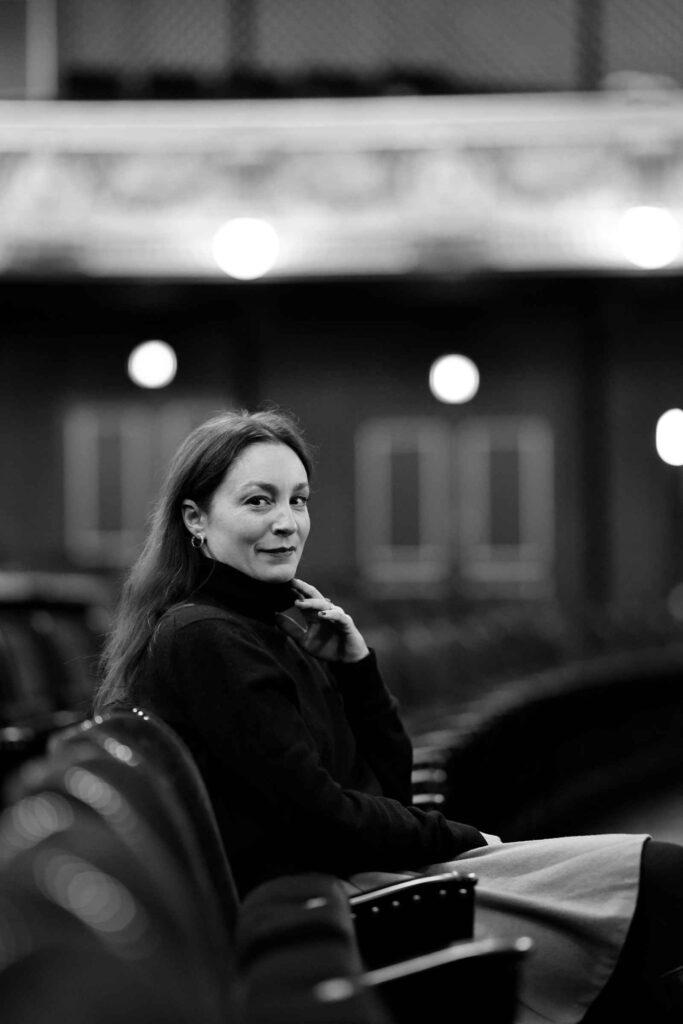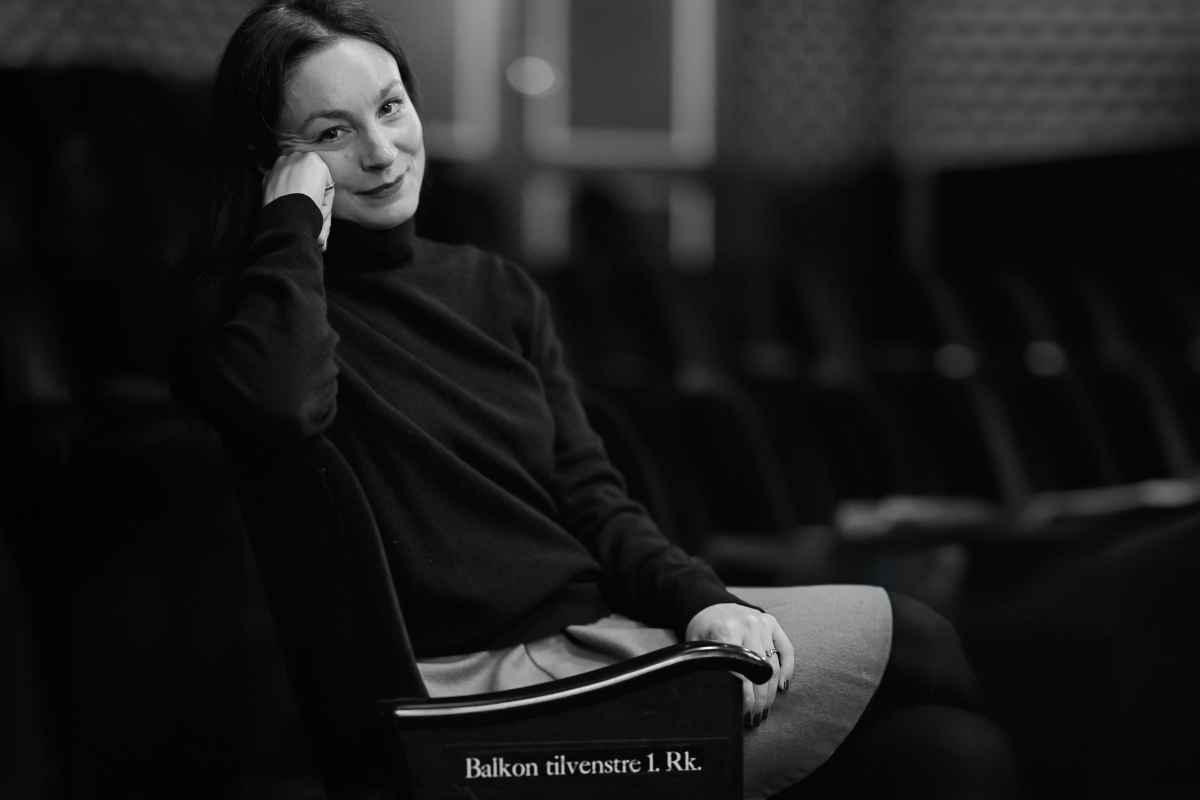
On December 2, 2025, I sat down with Amy Watson, the Artistic Director of the Royal Danish Ballet, to discuss her “Bournonville Strategy.”
For nearly two centuries, the Royal Danish Ballet has been defined by the works of August Bournonville. Yet, in recent years, that identity has reached a precarious threshold. Bournonville has all but disappeared from training and repertory. With a majority of the company’s dancers now recruited and trained abroad, many arrive in Copenhagen with little to no exposure to the specific physicality and mime traditions of the Danish style.
As Dinna Bjørn has poignantly noted, staging a Bournonville ballet at the Royal Theatre today has become indistinguishable from setting it on a foreign company with no prior knowledge of the heritage.
This conversation explores how Amy Watson intends to bridge this widening gap and revive the heritage. Watson also discusses her unique position as an American-born director with Danish values and her specific roadmap for the future.
Key themes of our discussion include:
- Her selection of two key stagers – Rose Gad, and Alexander Stæger – and two choreographers – Tobias Praetorius, Sebastian Kloborg – to carry the tradition forward.
- Evaluating the coaching of characters like James in La Sylphide and exploring “Reconstructions” for the contemporary stage.
- The Question of Ownership: How far can you go with Bournonville – before it’s no longer Bournonville?
- The 2031 Vision: Her long-term goal of staging a full Bournonville Festival.
Can the Royal Danish Ballet truly become a “Bournonville company” once again?
A Clear Framework
Alexander: Why do we need a Bournonville strategy?
Amy Watson: In my final years as a dancer and throughout my transition to rehearsal director and now artistic director, I could feel the vulnerability of the generation currently passing on the material and the legacy. They are all wonderful, each with different strengths and ways of teaching, but I could feel a fragility there. It made me nervous on a couple of levels – both as an artistic leader and as an artist in the room thinking: How am I going to pass this on? What do I need to do?
When I became rehearsal director, I was very vocal about this. How are we – my generation, the generation above me, and the one below – going to get the opportunity to teach, coach, and discuss new ways of renewing the style? I felt really passionate about that path, but I realized that while we had the answers, we didn’t have a plan. The task felt too significant to lack a formal strategy. I knew we needed to get moving.
At the same time – and I think we share this observation – the Danes may feel they know Bournonville, or perhaps they view him as less important than he is perceived internationally. Even after being here for 25 years, that still surprises me. How is he not a household name in the same way as Hans Christian Andersen, Hammershøi, or Karen Blixen?
That question inspired me to think about strategy in terms of branding, rebranding, and marketing. We need to expand our reach to children and to those who don’t necessarily see “fine culture” as ballet on the Gamle Scene, but who go to Tivoli. Should we do a ride? Should we do something like that to broaden his appeal?
That is why we need this strategy.
Alexander: In other companies, in connection with the New York City Ballet for example, you have the Balanchine Foundation. There is also the Ashton Foundation, which isn’t affiliated with the Royal Ballet. In other words, you have companies that perform the repertory, but you also have organizations whose purpose is to safeguard standards and quality: deciding who can coach what and conducting research.
Here, people have often asked: shouldn’t there be something similar? Because there is no copyright on Bournonville, it can quickly become a personal interest that gets confused with the subject itself, without fixed commitments or set goals. So, you aren’t talking about a Bournonville Foundation, but a strategy at least sets a clearer framework and a commitment.
Amy Watson: Yes, a clearer framework. Once we start building, I think we create a safer model across generations of teachers, instructors, and stagers – starting at the school level and moving into the company – which we can then market internationally. That opens the floodgates.
It becomes a situation where if American Ballet Theatre wants to do a new La Sylphide, they know we have a team ready. They call Denmark. We can send people to stage it; we have the definitive versions and can lead the discussion around them. Similar to the Balanchine Trust, we should be the ones people call. I think that is an important message to send to the world. However, we also have to be sustainable enough to actually do it, which has been tricky in the past. We haven’t always had the reinforcements. I want to build it so we can offer clear options of qualified stagers to the global community.
“You have to embody it, you have to live it”
Alexander: Who devised the Bournonville strategy?
Amy Watson: I had a partner to spar with, Alexander Stæger. It was my idea and my vision, and then I built what I’d call a dual strategy. One part is about renewing and revising Bournonville’s works, and the other is about preservation. Within that, I set out three points. The first is “Our Bournonville” – the idea that it is all of our responsibility. The second is “Bournonville’s Power of Storytelling.” And the third is “The Bournonville Next Generation,” which focuses on stagers, coaches, schooling, and how we actually achieve that. Alex and I went through the dual strategy and these three points together to build the final plan.
When you got the job as artistic director, was that part of what the board required, something they asked you to deliver?
Amy Watson: I honestly don’t remember. It was a very stressful period, being interim for three months while applying for the job. What I do remember is that there was a renewed focus on it. There were questions like: “What about Bournonville? How are you going to work with Bournonville? What is your vision?” They clearly wanted an emphasis and a discussion about why it matters. But I had already built my own personal strategy around it. I knew I wanted a communications plan and a formal framework. We have to lift up that whole heritage, alongside the other work of the Royal Danish Ballet.
Alexander: Obviously there are several pillars. Maybe you should outline what they are? How big a role should Bournonville play in the company today?
Amy Watson: Bournonville should play an almost daily role. I don’t mean we have to train in his technique or style every single day, but there needs to be an understanding across all employees at Det Kongelige Teater – not just Den Kongelige Ballet – that we have survived, thrived, and held an important place in the ballet world specifically because of him. That is a rarity.
Think of Balanchine or Petipa; we can argue about Ashton, MacMillan, and others, but it is rare for a company’s legacy to be so directly tied to one person. In Denmark, Bournonville isn’t always branded alongside household names like Blixen or Ibsen. I believe it is our responsibility to change that. Once you are an employee here at the Royal Theatre, ballet or non – ballet, you should know who he is.
It should simply be: “I’m part of the Royal Danish Ballet; Bournonville is in my blood because I’m here.” I know who he was, I know the essence of his ballets, and I understand why I am in this institution. We are all in that shared responsibility together. That is the “daily” part.
The other aspect is the embodiment of his style and technique as a living tradition. Storytelling aside, mastering this style takes months and years. I was in Hamburg recently watching Frank Andersen and Eva Kloborg stage La Sylphide. It was beautifully done, but it was a sobering reminder of how difficult it is to teach this technique when you are outside these walls.
You can be a fabulous dancer and still not grasp the technique unless you do it again and again – building the muscle memory, understanding the weight changes, and mastering the musicality. It was a healthy reminder that we face a serious uphill climb when we stage a new Napoli or prepare a Pas de Six.
To address this, we are putting Bournonville classes back on a weekly basis and ensuring our teachers are in a constant dialogue with the dancers. I recently watched Henriette Muus teach the company, and dancers were raising their hands to ask, “Why are we doing this? Why do we do it this way?” It was great because it became a conversation rather than just a rote instruction. You have to embody it; you have to live it. Whenever we do special galas, like Princess Isabella’s birthday recently, we have an opportunity to put Bournonville on the map and say: “This matters.”
It’s vital that we are actively dancing the repertoire. That is a major part of rebranding him: figuring out how we do it and how we get everyone on board, because this is our signature.
I would also like to shift the mentality of the dancers. A dancer might feel it is wonderful and exciting to dance the Swan Queen, but I want to help them feel that it is equally wonderful and exciting to dance the Sylph or Teresina. That shift may take time, but it comes down to communication: talking, being proud of your history, and truly feeling that legacy in your body.
Alexander: It’s a crucial point. It used to work exactly that way; everyone knew the third act of Napoli because it was so frequently presented as a standalone piece at galas.
However, during Nikolaj Hübbe’s tenure, that practice stopped, and there are fewer galas now in general. The times have changed in that sense, too: In the ’70s, ’80s, and ’90s, there was a state visit every year, and Napoli Act III was always on the program. That kept the work in the repertory and in the public eye. I think the confluence of those factors meant it stayed in the national awareness.
If you go back two generations, there was a completely different level of awareness, largely due to those televised galas. Everybody watched them; when I was growing up, we only had one channel, so if there was a gala, you watched it. Even recently, though, the Princess Isabella gala showed that these events can still capture a huge audience, including a younger one. So, you’re right.
Amy Watson: And I think we can get there. It may just take new ways of reshaping him.
I was very privileged; I went with the King and Queen on their state visit to France, to Paris, in March–April. And they asked me, “What do you want to bring?” Of course, we had discussions with the ministry and we ended up… I’m very passionate about a young choreographer named Sebastian Kloborg, and I think he has enormous talent, so he’ll have an important role with me.
But he and I talked it through.
If we weren’t bringing traditional Bournonville, because that wasn’t really on the cards, what do we do? We said: okay, let’s take La Sylphide and try to curate something different.
So that’s what we did. We took a male dancer from here, and we brought in Florence Clerc from the Paris Opéra. There were moments where she was almost herself, and moments where she became almost a witch. We had voiceovers and spoken text at the same time, alongside an electronic band, Den Sorte Skole, and with the dancers we curated something new and reflective, but with a lot of Bournonville in mind.
So there are ways we can play with it for different audiences. I think that’s interesting, as long as we’re not canceling what we already have. We have to balance.
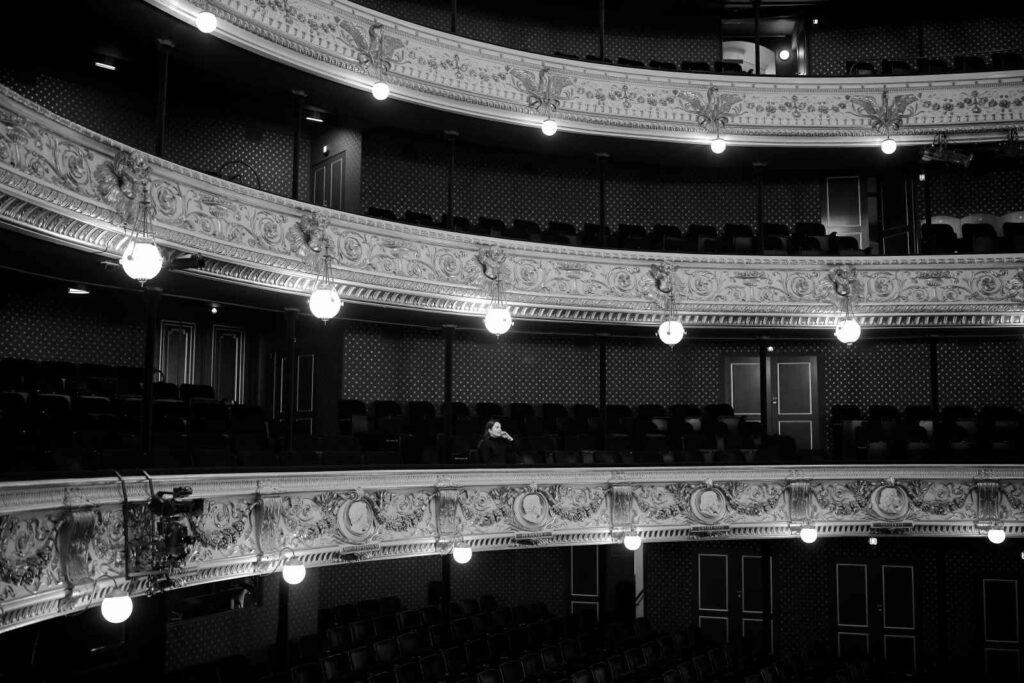
The Pillars of the Bournonville Strategy
Alexander: Yeah. In practical terms, the pillars of the strategy are? Repertory, training…
Amy Watson: Yes, repertory and training. That’s a big one. Koreorama – our education program side of it – they will have a module, whether it’s on mime, dramaturgy, or storytelling, where I would like them to focus on how Bournonville’s mime was so musical, how it was so clear. At the same time, if we have young choreographers that want to explore the style like Eliabe D’Abadia did last year, or someone wants to take some of the training classes and flip them and put them onto different music, that’s the second part of it. So that’s another model.
Bournonville salons – initiating those at least two times a year, hopefully four times a year. Trying to build our mentoring program for my generation, and generations below me. How can we pass it on?
I’m trying to build a summer school teaching program for the future and for the international people that come and say, “Hey, I want to teach Bournonville, can you help me do that?” We have a lot of outreach programs that we’re trying to build right now, together with the Plus department at Det Kongelige Teater.
If we always open the season with Bournonville, which is my plan from now on, we open with our tradition. When you come to the Royal Danish Theatre for the opening of the season, you’re always going to get Bournonville. I think that’s a beautiful way to honor him and to communicate how he’s important – making an emphasis on that and creating the red thread of the season from that, and our inspiration as a company of storytellers in ballet. I think – maybe I’m biased – but I think we’re the best storytellers in the ballet world, and I want to somehow link the inspiration from him to a new Eukene Sagues ballet, a new Oliver Starpov ballet, a new Sebastian Kloborg ballet. So that’s a lot of the groundwork.
Alexander: Should the Royal Danish Ballet be a Bournonville company, and what does that mean to you? What will it take to create a company that’s well-versed and masters the technique, the musicality, and the mime? It’s very specialized, and for many Danes it’s also a question of cultural heritage and identity. So it’s something that’s both subtle and obvious.
I think it was in Marina Harss’s article in the New York Times that Dinna Bjørn said that for a while it had been like when a Bournonville ballet was put on, it was like learning any other ballet. It could just as well be any other classical ballet from the international repertoire. It was not really part of who the company was.
Amy Watson: I think she’s exactly right there. I think that’s the key. Because like every other international company, we’re always in search of time for the process and, again, with our capabilities, I think it’s important that… if we always open the season with Bournonville, there’s a very short time frame.
You also know when you’re coming back from vacation as a dancer, the responsibility you have when you go out there – physically, mentally, emotionally, artistically – everything has to be ready for opening night. To do Bournonville is not easy. There’s so many levels to it. If we’re talking about the technique, your calves are up to your ears, your upper body has to be supple and strong, your storytelling has to be top-notch, and you have to research your characters. You have to understand those complexities of your character.
All of that should become easier for us if we’re more engaged in it, if we’re more excited about it, and if we have it more daily in our routine. So that we’ll be able to say, “Yeah, of course, we can put on Napoli right now. Of course.”
So I hope that will inspire it to be something that’s like water off a duck’s back. And so, of course, we should be a Bournonville company. It’s not even a question in my head.
Alexander: You’ve mentioned Rose Gad and Alexander Stæger as Bournonville ambassadors. Who will be teaching Bournonville, and how often?
Amy Watson: I’ll say that my aim is to do it weekly. I’ve also changed it from there being a lot of different versions. I think what I’ve realized over the years is that the first thing is for the artistic director to voice why you’re doing this – why I would encourage you to do this. So now everyone knows: I encourage you to do this. This is why I’m scheduling Bournonville classes. I think it’s important because ABC…
Normally we try to do it Wednesdays or Thursdays and as a “fælles skole” because I really would like to focus on community, “samfund,” Bournonville, and everything else.
You’re not separating the internationals, who haven’t done it before; they can watch the Danes, and the Danes can learn from the internationals – all of that dialogue. I was very specific in who I asked to teach, especially this first season. Right now, we’re in the midst of trying new things, and I’m going to get all the feedback and the reactions. There are going to be waves, but I asked Thomas Lund and I asked Henriette Muus. They switch based on their schedules: Thomas travels, and Henriette has the school.
I also think the two of them are a good match because, for me, they’re on two ends of the spectrum. Henriette teaches a very playful class with a twinkle in her eye and a sense of humor. And she speaks like a sailor! Thomas is more of the historian, steeped in research; he’s the ballet technical nerd. We’ll be able to talk about all those things together.
I think those two switching on and off for the company means that they’ll never get bored, they’ll always have two different voices, and I think it’s time for fresh blood. Those are the two that are on my shoulders right now.
The Bournonville Repertory
Alexander: No repertory without training. The Bournonville repertory was cut by Harald Lander in the first half of the 20th century. There were ballets that he thought simply didn’t stand the test of time.
What’s your feeling about the repertory now, if we set 2005 as the benchmark and say that was the status and the repertory that carried into the 21st century?
Can that full repertory be brought back, and should it?
Amy Watson: I think it’s a challenging question on different levels. There’s the practical and economical side we have to face. I think we also have to face the side of audience demand; right now, rebranding is really important for that – whether it’s rebranding him outside these walls, rebranding him for children, or rebranding him for the dancers. When I onboard people now, there has to be a certain buzz and a sense of responsibility to want to upkeep Bournonville together.
We have to look into how we are going to do this if we want to build some of those ballets that – let’s call them lost, or haven’t survived – or if we want to research them. That takes time, money, energy, and effort. I would love to do that and see if we can.
I think placing them at certain times is important for the reflection of society, with question marks. I’m very aware of our current geopolitical climate and what we put on stage matters. As best I can, with the wonderful resources that we have, I’m acutely aware that it’s important who comes in to see theater, how they spend their money, and why they’re coming to see us – whether it’s for escapism, entertainment, or because they want to learn or develop something. I think that’s really key.
When we put on a new Napoli, why are we doing it? What does it look like? How will people feel when they leave the theater? That really matters.
If we’re putting on, let’s say, Far from Denmark – which we will do – why are we putting it on? We’re putting it on to pay homage to a wonderful ballet filled with wonderful steps. But can we look at it differently now? Can we maybe do a sequel? For instance: her husband maybe left Denmark, and she goes looking for him through all these different colonies.
Can we do that and keep some of the wonderful parts of it and integrate them? There are a lot of questions, but I think it’s important that we don’t completely say “no.” I’m open to having those ballets, but we have to know why we’re putting them on.
Alexander: Marina Harss was asking that question a lot, actually, when she was here in connection with Alexei Ratmansky’s The Art of the Fugue: how many Bournonville ballets are there?
Amy Watson: It’s not an easy question to answer, and what was interesting for me at the salon confirmed something I had in my head already. Also, speaking in Hamburg with a few colleagues, people have different thoughts and opinions on whether it’s the libretto that’s most important, or the steps, the music, or the style and technique. Everyone is on a different page.
So perhaps we look at the ballet again. If we’re thinking about doing Abdallah, what is it about Abdallah that we want to do, and why, in this climate?
Let’s think about: what is it for me? If someone asked me, it’s the steps right now with that ballet. In Abdallah, the steps are absolutely genius for dancers. Someone else might disagree with me.
So how do we have those discussions that are very important and relevant?
The Question of Ownership – and Religion
Alexander: That brings me to another question: what is the responsibility to Bournonville himself? One of the questions we keep coming back to, since Nikolaj Hübbe removed the Christian elements from Bournonville’s ballet, is religion. It was also mentioned at the first Bournonville Salon. People suddenly seem very afraid of Christianity and religion, they don’t really want to touch it, but is it still his work if that’s not there, or does it suddenly become yours?
If you read the libretto, it’s there, and if you ask me, if you take it out, it’s not the same ballet because it’s such a core element. And Bournonville was, as we know, a firm believer.
Amy Watson: I think, first of all, going into anything with fear is something that’s going to hold you back as an artist, whatever it is. If you’re going into an artistic space – whether you’re the artist on stage performing the role, the stager, or someone rewriting the music – if there’s an element of fear, you won’t reach your full potential. That’s how I would guide that.
I don’t know why there is a fear around religion. I understand it on a cerebral level – religion has, by some accounts, caused disruption in the world – but let’s set that aside and just focus on: okay, what is it about the religious aspect that’s important to the story? Why was it important to him and of the time? So, are we doing it in that time, or are we moving it forward? What does religion look like in 2025?
Alexander: It’s funny because I’ve also been studying Søren Kierkegaard quite a lot parallel to Bournonville, and there are many similarities; obviously they knew each other. Nobody has any problem talking about religion in the case of the philosophy of Kierkegaard, and they’re exact contemporaries. His thinking and his art actually reflect many of the same ideas; in fact, Kierkegaard was inspired by several of Bournonville’s ballets in his writings, and maybe vice versa. So it’s just strange that in the intellectual and academic world it’s not an issue, but in the arts world it is.
Amy Watson: I wonder why it is. Is it because we, as artists, don’t want to conform to something that is not our art, because art is our religion? Is that why?
Alexander: Maybe it’s because Kierkegaard is open to interpretation. But the word is there, and you can’t change it. It’s very easy to change a ballet. Also, an interpretation of Kierkegaard is really just a commentary, whereas in the case of Bournonville, the ballet is only alive when it’s performed.
Amy Watson: Exactly. I don’t know why – I find it strange myself – but still, to this day, I can have discussions with academics who can study religion, like you’re saying, but also not be religious.
So that’s how I feel about putting it in a ballet: I can understand it, and I’m not fearing it. I don’t have to agree with it.
Alexander: No, but it’s also a thing of this time, that people identify so closely with art as individuals that sometimes it becomes problematic in these cases of historical works, where you have to ask yourself: is it about me, or is it about the work?
Amy Watson: So if we go back to what I was saying about what we put on stage nowadays, I think it is vastly important because of the world around us. When you put something on stage – whether it makes people uncomfortable or comfortable, or causes them to question something, or if they notice the religious aspect of it – what you write in the program is very important. How you speak about it to the press is very important. How you as an artist, if you’re on social media or if you’re inhabiting the role, do your research and understand it – you have to have that.
I think there’s no reason why, if we do Far from Denmark or Abdallah or something else, I shouldn’t speak to an expert. Of course, I should let people advise me and give me their thoughts.
In the end, it’s my head on the platter, but of course you should be open to: “Okay, what is this culture thinking, why, and all of that?” I think it’s more about opening up and having those discussions, and then boiling it down to: “Okay, what is the most important thing that we’re doing here?”
Are we renewing it? Are we preserving it? Are we going to have a discussion about what it is? And that applies to each of his ballets. I think that’s the fun time and energy we get to spend before we get down on stage.
Alexander: I think the question really is: are we reviving it, and how are we reviving it? Because it has been dormant for a while and there has been a break in the tradition, as it were. So it’s really a question of revival. How are we reviving it? How much of it is going to be renewal, and how much is going to be reconstruction?
Amy Watson: Yeah, exactly. But I think each one will have a different case. Each one – again, based on practicality such as finances, time, the team around it, and the subject matter of the ballet – will have to be completely specified. It won’t be the same recipe for all.
The Next Generation
Alexander: You’re entrusting the very important task of bringing back Bournonville to Rose Gad, Alexander Stæger, yourself, and Sebastian Kloborg; Marina Harss also mentions Tobias Praetorius as one of your collaborators in her New York Times piece.
So the last two, Kloborg and Praetorius, have experience as choreographers. But there are people who will be asking: why can’t Frank Andersen bring back La Sylphide? He staged it in Hamburg in December. What about Johan Kobborg? He’s the most experienced stager of Bournonville working today, and his productions are recognized as being of a high standard.
You have a fresh view, but these people have a lot of experience. Is this about generational change, artistic taste, or institutional politics?
Amy Watson: It’s all of the above. I’m not closed to the idea of those names you mentioned staging. It’s just that, again, there are practicalities. Right now, I inherited one and a half seasons. Let’s say this season I inherited, I made changes to Giant Steps, and next season is half me, half Nikolaj. The season after that – from ’27 forward – begins all of my work. So I also have to think about how many years, how much forward – planning, and which productions are important to me and why.
So Rose, for me, was the obvious choice. I didn’t know it was going to happen because she had her wonderful place at the school, but I’ve always dreamed of working with her and collaborating with her. I think not only pedagogically is she extremely gifted and a forward thinker, she’s a sensational coach and an amazing storyteller. I didn’t know if she had the ability to pass it on in terms of storytelling, but I can now see that she does.
I want her to also be mentored by Dinna, by Sorella, by Frank, and by other people. She traveled with me to Hamburg and studied Frank and Eva for eight days, questioned them, and got their feedback. It’s really important to me for her to feel safe moving forward and to get all the knowledge from as many people as possible.
And then Alexander Stæger, as you know, is someone I admire and respect deeply. He’s retiring this season. I knew when he retired that I wanted him to be on my team. We have to do this together.
Him and Rose are of two different generations. They have two very different strengths. Alex is learning the ropes in terms of technique and other things, because he hasn’t been a rehearsal director before, but he’s thinking outside the box. I need that, and he brings that to the table so we can spar and discuss. It’s a really good objective to have him on the team.
Then Tobias – I’m just a huge admirer of him in many, many ways. I think he’s on the very beginning journey of his choreography life. I see potential; it’s not there completely, he’s not “done and delivered.” He’s been wonderful in exploring his own style, but I can see in his style – it’s a lot of movement, a lot of waltz – that there’s something with Bournonville in there. I knew that if I approached him and said, “Do you want to do a new second act of Napoli?” I mean, he was terrified, I think – if I can speak on his behalf – but I know he can do it. I know he can take the underwater world and have it inspired by Bournonville’s technique and style, but also have his own – that “Toby” can be in there as an element with his sensational sense of musicality. Again, he’s a team player, so we can have wonderful discussions of how to do this together as a team.
And then Sebastian is a whole other ballgame. He’s the wild card for the ballets; we’re going to go very far out and radicalize. He’s the one who knows how we can flip them on their head.
What do we do? How do we do this? Do we do a sequel? Do we do a prequel? But Sebastian and I share the same belief: we’re not taking down the statue. We’re keeping the statue, and we’re going to show the audience the statue and discuss why it’s important. But we’re going to build a new statue too, right next to it. So that was very easy for me to say: “Far from Denmark; you!”
And then Frank and Johan, whom I have huge respect for – though I’ve never worked with Johan directly because I was doing Etudes when he staged his ballets here. But I know him and we’ve always had a good camaraderie, so I’m not closed to the idea. I just haven’t gotten to that in the planning yet, what that could be.
Frank, I’ve grown up with for most of my career, and that’s why it was important for me to see him stage La Sylphide now, because I’ve seen Napoli. I’ve been in Napoli; I’ve done Napoli with him. I think I know what he would say to me about it, and if not, I’ll call him up and say, “Can you come give me advice?”
He was very generous. He came in for three or four days for La Ventana and Kermesse. We sat in this office twice, an hour each time, and he gave me, Alex, and Rose feedback. He sparred with us. He sat down with us and said, “This works, and I don’t think this works. What about this? What about that?” – both technical and artistic. So, I know he’s a phone call away. I have a thought about doing something with him, but again, there are practicalities now, so I need to think about how and when – and if – it’s possible.
But yeah, I see him as a mentor for myself in one way.
Alexander: What about Nikolaj Hübbe?
Amy Watson: I see him as another mentor. He’s someone I can always call and say, “We’re doing your La Sylphide; remind me of your thoughts. What do you think? How do you do this?”
Right now, Rose will have the task of setting it up. I will come in and help her, and Sorella will mentor her, because she was also around when Nikolaj was building it. But there are questions now with, for example, Madge. Historically, it’s been man, woman, man, woman. With this version and Mia Stensgaard’s costumes, should we do a man? Should we not do a man? Why shouldn’t we do a man? How is that going to be? Rose and I had a lot of interesting discussions about how we coach these characters differently now. Who is James?
Lloyd Riggins and I had a discussion, Frank Andersen and I had a discussion – and Lloyd and I were on one side and Frank was on the other. It was a little bit like we both respect each other, but respectfully, we don’t agree on who James is. And then I know Nikolaj is on another one.
So how you coach matters too, and how you see it in who you cast – all of those are important factors. But as for Nikolaj, I of course see him as a mentor; however, I think right now my plans with Nikolaj are to stay on the Balanchine. We’re doing Apollo and then Jewels next year.
Amy Watson’s Role
Alexander: Can I ask you respectfully about how you see your own role and your qualifications as a Bournonville stager compared with some of these experienced people we’ve just talked about?
When I interviewed you last year, you expressed some frustration with regards to the Danish issue. “When is one Danish enough?” you said. You have Danish citizenship. You’re married to a Danish man. You have two children who were born here.
Is nationality important to the question of Bournonville? And by that, I’m also asking if “Danishness” is part of Bournonville as cultural heritage.
Amy Watson: I think yes and no. I feel more Danish than American in my values, in terms of my way of life, and in terms of how I view art and live my life. So I think it’s very easy for me to go into it, if I’m staging a ballet, and think Danish. I don’t think that’s even a question.
That would be a question for someone who doesn’t know me, I think. All the people that I surround myself with – and all those wonderful generations above me – know that my values are the same, even though I wasn’t born here. I have the same beliefs, and I feel a great deal of responsibility towards this.
I don’t take this lightly, simply taking over the directorship. I feel that responsibility heavily, and I know the role model I have to set – being a foreigner and a female in this role – matters. It matters for all sorts of reasons: for the next woman who sits here, for the next international who sits here, whoever that may be and whenever that may be.
I think in regards to staging Bournonville ballets, I’m extremely capable in the ballets I know. I will stick to what I know for now. I think the great Kevin Haigen and John Neumeier said to me once, “Never teach what you don’t understand.” So that’s enough for me.
Amy Watson: I understand La Sylphide. I understand Napoli. I understand Abdallah to an extent because I was immersed in the role of Irma for so many years, and I can understand the physicality. Now, if I’m to stage the full thing, I need a mentor. I need some help and some background. For the other ballets, like Kermesse in Bruges and La Ventana – no. Far from Denmark – no. So I’m trying to tread lightly, but also to understand that it shouldn’t be me doing all those ballets. I think that would be a disservice to everyone else.
I think there are many former dancers who could stage Bournonville. There also has to be the interest from the other people as well.
But the ones I have hand-picked – Tobias Praetorius, Sebastian Kloborg, Rose Gad, and Alexander Stæger – those are four that I see potential for right now. I want to invest in them, and then I’m open to others. These four are the first four, and then we see what grows from there.
Reconstructions
Alexander: I already asked you about the Bournonville Foundation, and we touched briefly on reconstructions, but I’d like to ask, how you feel about reconstructions and by that I mean “Reconstructions”.
It’s been done, but rarely successfully. Abdallah has probably been the most successful. The Lay of Thrym was a complete flop – Konservatoriet didn’t really work. Then there’s been a couple of others… Pontemolle, which I haven’t seen, and also From Siberia to Moscow.
But I think generally we can say they haven’t worked so well. In Russia, they can pull off something like Fille du Pharaon, which a completely insane story and aesthetic that is as unlikely and as unsuited to ballet – seen with contemporary eyes – as Bournonville’s Nordic ballets, Valdemar or Valkyrien for instance.
So “Reconstructions”, do you believe that’s possible for Bournonville?
Amy Watson: I will explore them again, if it’s the libretto or if it’s the steps? What is it that we’re going for? We have to understand… If it’s the steps… we can do that in a way that maybe doesn’t look like the original, somehow, but if we extract some parts and take them in either as divertissements or we connect them to something else. That I’m interested in.
I think, if we use Konservatoriet as an example, I’ve thought a lot about that because I love “The Dancing School”, it’s something I’ve already placed in the repertoire for now, for 27-28 as part of a triple bill. It’s so pure. It’s so clean. It is a gift to have in the company.
Alexander: You should do it every year as the Danish equivalent of the Défilé of the Paris Opera Ballet.
Amy Watson: It’s absolutely a gift. I have thought about placing as the start of each season as a tradition, but I’m not quite there yet. But I’ve placed it in 27-28 at the end for a certain reason, but with the first act of Konservatoriet, I think we could modernize it, maybe? I’m not quite sure yet, I have been exploring the idea of doing something with social media somehow. But what I don’t want to do is lessen or water down the beautiful school. I have such respect for that act. So the first act has to be equally sublime. So I would like to get my hands on it, but I’m not sure how yet.
Alexander: Are you getting new sets or will they be the old ones?
Amy Watson: Right, we’re looking into it. I know that we have them, but the condition of them is questionable. We will be doing the original, we will be doing what it looks, you know with the whole studio, the Degas…
Alexander: But the thing is that that’s really a misunderstanding because it was not Degas, you know, it’s much earlier. So actually it should look a little bit different, if you want it to be historically accurate. Bournonville set it in a specific year, and Degas is much later, 60 years later, so the look should be different. It could be very beautiful. It doesn’t have to be unbeautiful, I think, it’s just because in the 1970s somebody thought, ah Degas could be nice. And then it’s forgotten that is actually something else.
Amy Watson: It’s the same with La Sylphide, right. Like, if we look at some of the sylphs from the past, it’s so different from what I now think of as La Sylphide, or traditionally as La Sylphide, so I’m wondering like way down the line, if we could explore something with that.
Rose and I – now I’m going off subject – but it was so interesting, we were talking about La Sylphide in Hamburg, Rose, Lloyd Riggins and I, about how, at that time, dancing on pointe was almost not really on pointe, more demi – pointe, but the look of it has to look like you’re hovering above the floor.
How to coach that and how to teach that: you should be flying, you should be hovering. All of this. I think it’s because it is hard technically, it’s become so much about the technical feat of it, that you forget what the first quality or the quality and the essence of it was, and at the time, what a ballerina was trying to do. So I’d love to try and explore how can we coach more like that.
Is There An Audience for Bournonville?
Alexander: Is there an audience for Bournonville? And how did you think Kermesse in Bruges resonated with the dancers, but also with the audience? Did it sell?
Amy Watson: It could have sold better. It didn’t sell terrible, it didn’t sell amazing. It could have sold better. I think the dancers resonated with both La Ventana and Kermesse really well.
I have to say, it was a wonderful moment for me and for the company. After we closed on opening night, and actually when we closed on the final performance, everyone seemed to genuinely have a good time and a good experience and learn something. So I thought okay, wow, okay, we can do this. This is great.
I think, if we’re to do Kermesse again, I would like to make it more condensed in sense of the timings of when the scenes change, the music sometimes, the score. It’s not that I want to trim some of the dancing, but I’m questioning the divertissement, if it needs to be there, even though I love it as an artist.
But I do think the humor is actually timeless. The sense of timing, the humorous timing of those characters. Again casting it’s very important, and I think how it’s coached is just as important. So I think it’s something we need to continuously do.
I believe there is an audience for it, yes. We can be better at marketing, and we can be better at maybe making the performance more condensed.
We had our wonderful New York City Ballet colleagues here that were performing at Tivoli at that time, and they came and they came to the opening night and said, “Oh my god, I wish we could do that. That’s so great. And it looks so fun and blah blah blah.”
It was wonderful to get a praise from you know, former colleagues and people from the outside.
Alexander: I thought maybe the evening as a whole had a bit of a problem, that maybe if Kermesse had been paired with something else and La Ventana with something else, maybe it would have been a more complete experience for contemporary audiences.
Amy Watson: I think you’re right on that. I think in the future, if we’re to program it and if it’s two pieces and not Napoli or A Folk Tale, it needs to be very thought through. Again, since we’re opening with it, we have to ask why and what we’re doing and what is relevant.
Alexander: So my last question is about the Bournonville Festival. What are the objectives of staging a festival?
Amy Watson: We’re looking into the festival, with all the practicalities, but my goal is – if we can find the potential funding – to build enough new productions, whether it’s reviving or renewing between now and then? Then we can put a festival on.
I think, I need to question if that time, if we don’t and we need to take what we have in repertoire, we need to make sure… If we’re having people come here, we have to question what we’re putting on stage again, why are we putting it on stage?
So right now the festival for me is the goal, but I can’t promise it yet. That’s my big wish.
It’s spring 2031. It should be June 2031 because of the 13 – year mark, that what Bournonville said it takes to make a dancer, from student to company. So let’s say 2005, 2018, 2031. And also to give myself some time.
Alexander: And are you planning like a whole week like before or something smaller?
Amy Watson: If I have my dreams come true, a week. I would love a week and like a really I think a week, it was a wonderful experience. Because we had a year to build up doing all those ballets throughout the season, and then we finished with a wonderful week of celebrating and doing all those ballets. Every night was a different experience.